
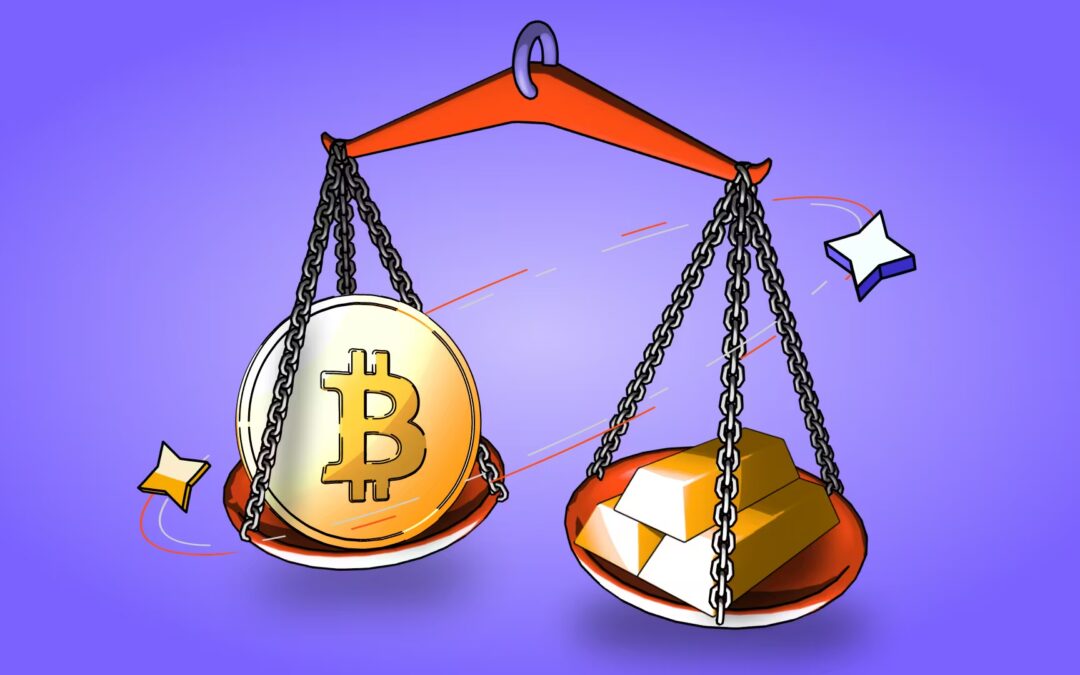
How Does Bitcoin Compare to Gold as a Store of Value?
When people talk about safe investments or long-term wealth protection, the conversation almost always lands on gold. It has thousands of years of history, it’s tangible, and it has survived war, inflation, and economic collapse. But today, another contender is challenging its throne — Bitcoin.
Even though they’re completely different in form, both Bitcoin and gold share one important purpose: they help people protect value over time. But how do they really compare? Let’s break it down in a simple, human way.
1. Scarcity: Digital vs. Physical
Gold is scarce because nature made it that way. It takes mining, heavy machinery, and huge energy to pull it out of the ground. That’s why it holds value.
Bitcoin, on the other hand, has programmed scarcity. There will only ever be 21 million Bitcoins, and nobody — not governments, not banks, not developers — can change that. For many investors, this predictable limit gives Bitcoin an advantage over gold, whose total supply is unknown. More gold could still be discovered.
2. Portability: Bitcoin Wins Easily
Imagine trying to carry $100,000 worth of gold on a plane. Not ideal.
But Bitcoin? You can store millions on a small hardware wallet or even just a seed phrase in your head. This makes Bitcoin extremely portable, especially for people who live or travel globally.
3. Divisibility: Bitcoin Is More Flexible
Gold can be divided, of course, but not easily. You can’t shave off tiny pieces at a shop to pay for something.
Bitcoin, however, is divisible down to 0.00000001 BTC (one satoshi). That level of precision makes it more practical for modern digital payments.
4. Durability: Both Strong, but in Different Ways
Gold doesn’t rust or decay — that’s why ancient civilizations stored it.
Bitcoin is digital, so it doesn’t degrade either. As long as the internet exists and the network is running, Bitcoin can survive indefinitely. Some even argue it’s more durable than gold because it can’t be physically stolen or damaged.
5. Volatility: Gold Is Stable, Bitcoin Is Wild
Here’s where gold shines. It’s slow, steady, and stable. Its price doesn’t usually jump 10% in a day.
Bitcoin, however, is known for high volatility. Its price can rise fast, but it can drop just as quickly. This is why some people hesitate to use it as a long-term store of value, even though historically, Bitcoin has shown strong growth.
6. Adoption: Tradition vs. Innovation
Gold has been trusted for thousands of years. Central banks hold it. Nations store it. Jewelry markets depend on it.
Bitcoin is only 16 years old, but its adoption is growing fast. Big companies, financial institutions, and even governments are now paying attention to it. Younger investors, especially, see Bitcoin as “digital gold.”
So Which Store of Value Is Better?
Honestly, both have strengths.
Gold wins in stability and history.
Bitcoin wins in portability, divisibility, and predictable scarcity.
That’s why many smart investors today hold both. Gold for its timeless safety. Bitcoin for its modern growth potential.